
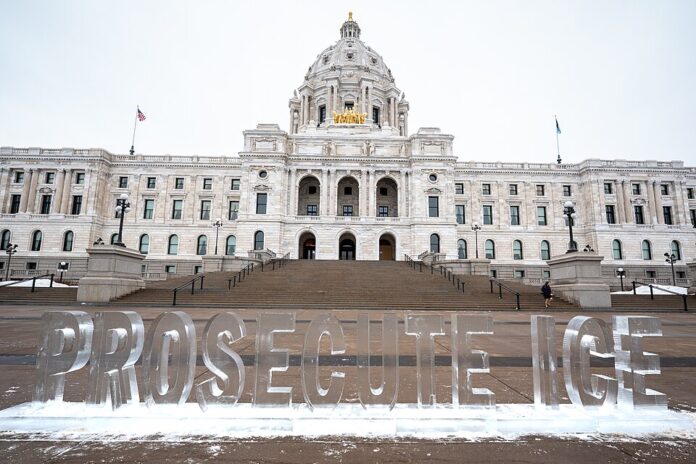
The Trump administration is pulling out of Minnesota after its “largest immigration enforcement operation ever” sparked mass protests, widespread fear, and two fatal shootings of U.S. citizens.
Border czar Tom Homan announced Thursday that Operation Metro Surge—the crackdown that flooded Minneapolis-St. Paul with thousands of federal officers since December—is ending. The operation resulted in more than 4,000 arrests, Homan claimed, calling it a success that made Minnesota “less of a sanctuary state for criminals.”
That framing is disputed by basically everyone on the ground. Many of those arrested had no criminal records. Targets included working families, children like 5-year-old Liam Conejo Ramos, and U.S. citizens. Two of those citizens—Renee Good and Alex Pretti—were shot dead by federal officers.
The announcement represents a significant retreat for an administration facing mounting political backlash. A new AP-NORC poll found most Americans think Trump’s immigration policies have gone too far, and Democratic lawmakers are refusing to fund the Department of Homeland Security without restraints on immigration officers.
“We will believe it when we see it—and any ICE presence is a threat to everyone’s safety,” Minneapolis City Council Member Aurin Chowdhury said in a statement.
The surge transformed life in the Twin Cities. Convoys of unmarked SUVs filled immigrant neighborhoods. Masked officers in body armor made arrests while protesters surrounded them with whistles and taunts. Schools emptied as children stayed home. Immigrant businesses shuttered. Church pews sat vacant. Volunteers delivered thousands of meals to families too terrified to leave their homes.
Gov. Tim Walz, who clashed repeatedly with federal authorities, called the operation an “unnecessary, unwarranted and in many cases unconstitutional assault on our state.” He proposed $10 million in aid for affected businesses and called on Washington to fund the recovery.
“You don’t get to break things and then just leave without doing something about it,” Walz said. On helping the feds depart: “We will help you get to the airport. We will clear the road to get to the airport. I will pack your damn bags if that’s what it takes.”
Russ Adams of the Lake Street Council, a nonprofit serving the largely immigrant neighborhood, estimated businesses there lost tens of millions of dollars in December and January alone. “We’re not going to recover in March, even if 2,000 ICE agents leave tomorrow,” he said. “You don’t come back from that.”
Trump initially claimed the surge targeted fraud in publicly funded programs, blaming Minnesota’s large Somali community—most of whom are U.S. citizens. The operation then shifted to Latinos and West Africans.
Even some Republicans expressed concern. Sen. Rand Paul said the shootings damaged public trust. “To restore trust in ICE and Border Patrol, they must admit their mistakes, be honest and forthright with their rules of engagement and pledge to reform,” he said Thursday.
At a makeshift memorial for Renee Good, Minneapolis resident Sheila Rzepecki dismissed claims that the surge made anyone safer. Her disabled son’s health aide, a Colombian immigrant in the country legally, has been too scared to leave her home.
“The people they are rounding up are the people that are so important to our community,” Rzepecki said. “Don’t believe what they say.”