
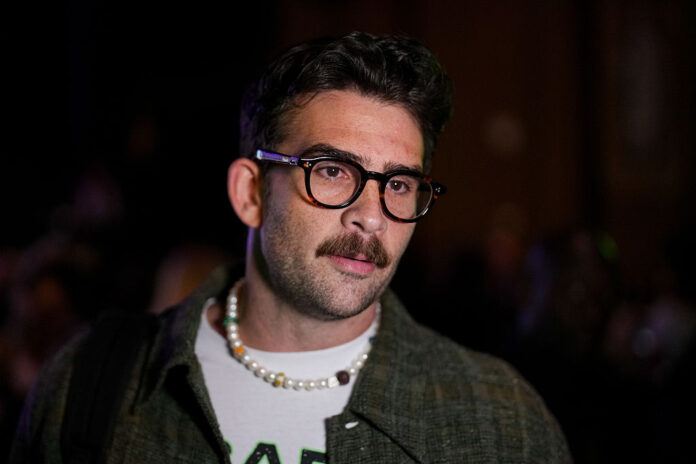
When reporters asked Hasan Piker what he wanted written into the Democratic Party’s platform, he didn’t give them a vague talking point. He told them the party should prosecute corrupt members of the Trump administration and hold accountable any ICE agent who broke the law on the job.
It’s the kind of answer that carries different weight depending on who’s saying it. And this year, Piker isn’t just saying it from behind a streaming setup — he’s saying it from the campaign trail.
Surrounded by reporters, Hasan Piker gets asked what he would demand of the Democratic platform
— Hasanabi Productions (fan account) (@HasanabiProd) August 2, 2026
“Arrest and prosecute every prominent member of the Trump administration that has engaged in corruption, Arrest and prosecute every ICE agent that have committed crimes on the job” pic.twitter.com/gnfgCyriQL
From the Studio to the Stump
Piker has built one of the largest political audiences in the country on Twitch, where he’s known for marathon streams that stretch past ten hours and a young, heavily male, progressive fanbase. For most of his career, that influence stayed online — he’d bring politicians onto his show, but rarely showed up at their events in person.
That changed this spring. In April, Piker traveled to Michigan to campaign alongside Abdul El-Sayed, the progressive candidate running in the Democratic primary for the state’s open U.S. Senate seat. The two held back-to-back rallies at Michigan State University and the University of Michigan, drawing lines that stretched around the block.
El-Sayed’s pitch to voters centers on Medicare for All and a sharp break from establishment Democratic messaging. Piker, by his own admission, doesn’t do this often. “When Abdul asked me to come on this journey with him, I said yes, absolutely, not realizing the backlash that would even start,” he told reporters in East Lansing. He added that he’d do it again regardless, because El-Sayed “doesn’t treat people like they’re stupid.”
The Backlash — and What It Reveals
The rallies didn’t just draw supporters. They drew immediate, pointed criticism from inside El-Sayed’s own party. Michigan Rep. Haley Stevens, El-Sayed’s chief primary opponent, and Rep. Mallory McMorrow both condemned the appearances, with McMorrow going as far as comparing Piker to far-right streamer Nick Fuentes. More recently, Rep. Hillary Scholten cited Piker’s past comments about 9/11 in explaining her own refusal to back El-Sayed’s candidacy.
That criticism points to something real: Piker has a documented history of inflammatory remarks about Israel and Jewish communities, and his appearances with El-Sayed — who grew up near a Detroit-area synagogue that was attacked earlier this year — became a flashpoint in an already raw national conversation about the war in Gaza and the Democratic Party’s internal divide over Israel.
El-Sayed’s response wasn’t to distance himself. Standing on stage at MSU, he argued that a party that polices who’s allowed inside its tent can’t simultaneously claim to represent everyone under it. It’s a bet that the enthusiasm Piker generates among online, disengaged young voters outweighs the establishment blowback — and it’s a bet that’s forced Michigan Democrats into an open, public argument about who the party is actually for.
Attendees at the rallies made the stakes plain. “I think one of the mistakes that the Democratic Party makes is estranging the left,” one attendee told CBS News, adding that party leaders push Democrats to engage with conservatives while keeping the left’s own influencers at arm’s length.
Why It’s Working
Whatever the establishment’s discomfort, the numbers tell their own story. A Republican pollster tracking the race pointed to Piker’s involvement — alongside an endorsement from Bernie Sanders — as a driver of the “unpaid media” that helped erode McMorrow’s standing in the primary. Piker’s take on the criticism was blunt: people either opposed El-Sayed because they support Israel’s conduct in the war, or they dismissed the campaign as unserious because they were fixated on “a random Twitch streamer.” Either way, he argued, the attacks were a distraction from the actual stakes of the race.
That race is for the seat being vacated by retiring Sen. Gary Peters — a genuine opportunity for Michigan progressives, and a test case for whether the party’s online left can translate real-world turnout, not just streaming numbers, into primary votes.
The Platform Demand
It’s against that backdrop that Piker’s comments on the Democratic platform land differently than they would from a commentator with no skin in the game. He’s not just offering an opinion from the sidelines — he’s spent months putting his name and his platform behind a specific campaign, in a specific state, in a race that’s become a proxy fight over the party’s direction.
His demand was direct: prosecute Trump administration officials who engaged in corruption, and prosecute ICE agents who committed crimes on the job. Not a messaging strategy. Not a five-point plan released by a consulting firm. A statement of what accountability should actually look like, from someone with the reach to put it in front of millions of people who don’t normally follow C-SPAN.
Centrist Democratic strategists, meanwhile, have spent the spring and summer treating Piker himself as the central problem facing the party — a curious use of political energy at a moment when courts are gutting democratic guardrails and oil prices are climbing toward $150 a barrel.
The Real Question
The controversy around Piker’s involvement is real, and voters weighing his past comments are entitled to weigh them. But the underlying question the El-Sayed campaign is testing isn’t really about one streamer. It’s about whether the Democratic Party can hold together a coalition that includes both its online, disaffected left and the institutional wing worried about optics — and whether “accountability,” as Piker defined it, is a demand the party’s leadership is actually willing to meet, or just another position to be managed and diluted.
Piker’s answer to that question is yes. Michigan voters will decide whether they agree — and whether the party is listening either way.