
The Supreme Court is about to decide whether Donald Trump can single-handedly rewrite the 14th Amendment, and Bruce Springsteen just entered the fight with the most on-the-nose song in American history.
On April 1, the Court will hear oral arguments in Trump v. Barbara — the case challenging Trump’s January 2025 executive order that tried to strip birthright citizenship from babies born on U.S. soil.
The ACLU, which filed the very first lawsuit against the order just two hours after Trump signed it, has now teamed up with The Boss for a 30-second ad campaign set to “Born in the U.S.A.”
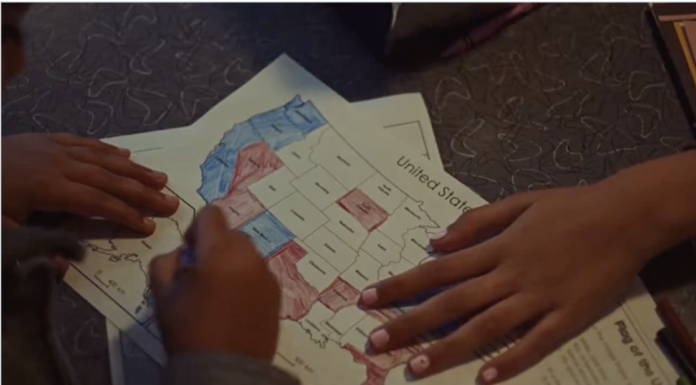
The ad features images of Americans of all backgrounds — learning in classrooms, working job sites, celebrating with family — set to the brassy refrain of arguably the most misunderstood patriotic anthem ever recorded. It’s airing nationally starting on Morning Joe.
ACLU Executive Director Anthony D. Romero said the idea hit him during a Katie Couric interview two days after Trump’s inauguration. “He had the audacity to try to end birthright citizenship — as if a president could rewrite the 14th Amendment on his own,” Romero said. He started singing the chorus on air. Then he went back to his office and started making calls.
Here's the new ad from the ACLU about birthright citizenship featuring the song 'Born in the USA' from Bruce Springstein
— Andrew Arenge (@MrArenge) March 23, 2026
Interestingly, the ad hasn't been flagged as being a political ad by Google & isn't currently available in their political ad archive https://t.co/GcDiV1qhKo pic.twitter.com/ssCqQXWvit
Here’s the thing about the ACLU: they saw this coming before the election. They studied Project 2025, knew birthright citizenship was on the chopping block, and had their legal theories ready. Days before the vote, someone close to the incoming administration confirmed it was happening. “I came back to the office and told our lawyers, ‘We have to get ready. This is really going to happen,'” Romero said.
Trump signed the order on Inauguration Day. The ACLU filed suit two hours later. On a federal holiday.
Every single court that has looked at this executive order has blocked it. Every one.
Getting Springsteen on board turned out to be, in Romero’s words, “the easy part.” He worked through CAA and Springsteen’s legendary manager Jon Landau, who showed immediate enthusiasm. Sony Music got on board. The harder part was waiting to find out if the Supreme Court would even take the ACLU’s case — which didn’t happen until December 2025.
Once they got the green light, it was a sprint. Anderson Wright of Stink Films directed 13 shoots over five days across Southern California with a cast of over 115 people. Romero called it a “Super Bowl-caliber ad” — something the ACLU had never attempted before.
Meanwhile, Springsteen was already doing his part. His onstage remarks during concerts — particularly in Minneapolis this January — directly challenged the administration at a time when, as Romero put it, “the titans of industry were caving and sniveling” and “universities and law firms were being cudgeled and cowed.”
The stakes here are not abstract. Romero made it personal: his college roommate from Kolkata is now an American citizen whose kids were born in the U.S. “If Trump had his way, those kids — now my godchildren — wouldn’t be American citizens,” he said.
If the Court sides with Trump, Romero laid out what that actually means: hundreds of thousands of babies born on American soil every year with no citizenship, no legal identity, no protections. A permanent underclass that grows with every generation.
Romero said he’s confident they’ll win, pointing to more than a century of Supreme Court precedent. “The president does not get to decide who is a citizen. That is not how it works.”
But if they lose? “We will cry for one day, and then we will get to work to restore what we lost,” he said. “The ACLU has been around for 106 years, and if it takes us another 106 years to restore birthright citizenship, we will never let up. I might be dead, but the fight will continue.”
The case will be argued by ACLU Legal Director Cecillia Wang.
Springsteen wrote “Born in the U.S.A.” in 1984 to wake people up about a country abandoning its veterans. Forty-two years later, the ACLU is using it to remind a different America of a different betrayal — one where the government tries to decide which babies born here actually count as American.
Romero called it “one of the most consequential cases before the Court in a hundred years.”