
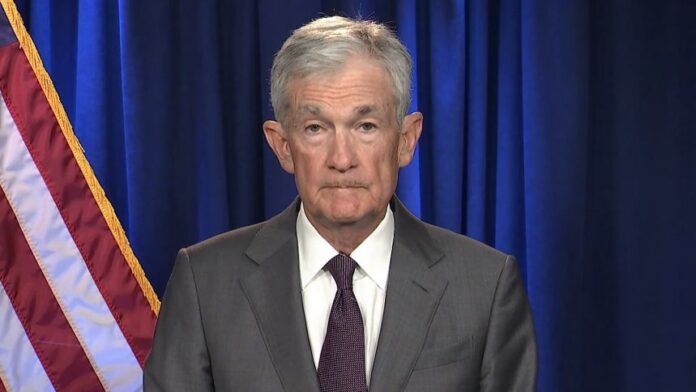
Donald Trump’s decision to launch an investigation into Federal Reserve Chair Jerome Powell isn’t just another political spat between a president and a central banker. It’s a full-scale assault on one of the few remaining institutions that stands between working Americans and complete economic chaos.
WHY IT MATTERS: The independence of the Federal Reserve isn’t some arcane technicality that only matters to Wall Street traders and economics professors.
It’s the firewall that prevents presidents from manipulating interest rates to juice the economy before elections, then leaving everyone else to deal with the inflation and recession that follows. When that firewall comes down, working people pay the price.
Trump wants Powell gone because the Fed chair won’t simply slash interest rates on command. But when presidents control monetary policy, they flood the economy with cheap money right before they need votes, creating asset bubbles that primarily benefit the wealthy who own stocks and real estate.
Then, when inflation inevitably kicks in, it’s working families who watch their paychecks lose purchasing power while their grocery bills skyrocket.
LOOK AT HISTORY: Every country that’s abandoned central bank independence has followed the same trajectory.
- Turkey’s Erdogan fired his central bank chief for refusing to cut rates, and the lira collapsed, wiping out ordinary Turks’ savings.
- Argentina’s political interference in monetary policy has created inflation so severe that workers literally cannot keep up with price increases between paychecks.
- Venezuela’s story is even more catastrophic.
The pattern is consistent: Short-term political wins for those in power, long-term economic devastation for everyone else.
THE TRUTH: Trump’s investigation isn’t really about Powell’s performance. The Fed has been navigating one of the most complex economic environments in modern history, managing the aftermath of pandemic stimulus, supply chain disruptions, and historic inflation.
Reasonable people can disagree about specific policy choices, but Powell has maintained the Fed’s core mandate of price stability while trying to avoid triggering mass unemployment.
What Trump wants is simple: A Fed chair who will pump money into the economy to create the illusion of prosperity while he’s in office, regardless of the economic wreckage it leaves behind. He wants someone who will prioritize his political fortunes over the financial security of working Americans.
HOW IT WILL AFFECT US: This matters enormously for labor. When central banks lose independence, workers lose bargaining power. Chronic inflation erodes real wages faster than most unions can negotiate raises. Unstable currencies make long-term planning impossible for families trying to save for homes, education, or retirement. And when the inevitable crisis hits, it’s always working people who face layoffs while the wealthy, who can move money across borders and into hard assets, remain insulated.
The business class knows this, even if they won’t say it publicly. Wall Street depends on Fed independence because unpredictable monetary policy creates the kind of instability that destroys markets. But they’ll accept a subservient Fed if it means tax cuts and deregulation continue. Working Americans don’t have that luxury. We can’t hedge against currency collapse or relocate our assets to Swiss banks.
BIG PICTURE: Trump’s investigation is also part of a broader authoritarian playbook.
Independent institutions are obstacles to consolidated power. Courts, regulatory agencies, inspectors general, and yes, central banks all serve as checks on executive overreach. Undermining them one by one, claiming each is corrupt or incompetent or disloyal, is how democracies slide into autocracy. And when democratic institutions fall, workers always suffer most.
The Federal Reserve isn’t perfect. It has historically prioritized the interests of capital over labor, been too slow to address unemployment, and too quick to raise rates at the first sign of wage growth.
Progressive reform of the Fed is absolutely necessary. But reform means making the institution more accountable to working people’s needs, not making it a tool of presidential whim.
There’s a reason why the Fed was designed as an independent agency. The founders of the modern Federal Reserve system, including many who were far from progressive heroes, understood that monetary policy had to be insulated from short-term political pressures. They’d seen what happened when politicians controlled the money supply. They’d watched economies collapse under the weight of politically motivated currency manipulation.
Trump’s supporters may believe he’s fighting the “deep state” or taking on corrupt elites. But the Federal Reserve’s independence protects ordinary Americans far more than it protects the powerful. The wealthy can survive economic instability. Working families cannot.
BOTTOM LINE: This investigation is a warning shot. If Trump can intimidate or remove Powell, every future Fed chair will know their job depends on presidential approval.
Monetary policy will become another lever of political power, another way for the executive to reward friends and punish enemies, another institution that serves the powerful rather than the public.
The stakes couldn’t be higher. An independent Fed is one of the last guardrails preventing complete economic subservience to political power. Once that’s gone, working Americans will be at the mercy of whichever administration happens to be in power, with no institutional protection against policies that sacrifice long-term stability for short-term political gain.