
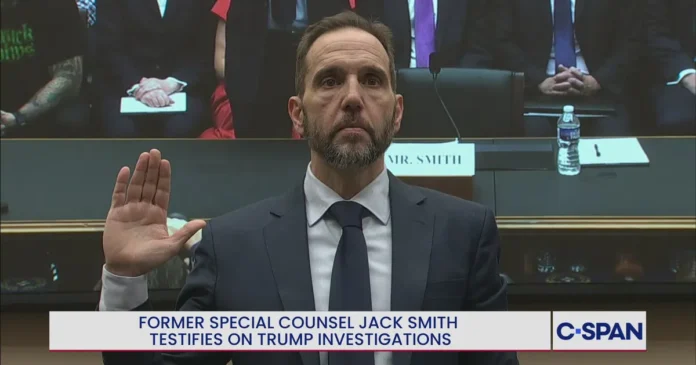
Special Counsel Jack Smith quietly confirmed something major during his congressional testimony yesterday: the federal cases against Donald Trump were dismissed “without prejudice”—meaning they can be refiled after he leaves office.
Rep. Hank Johnson (D-GA) asked Smith directly whether the indictments “can be re-brought or resurrected after Trump leaves office.”
Smith’s response: “They were dismissed without prejudice.”
When Johnson pressed further—”So they can be refiled? And he can be prosecuted after he leaves office. Is that correct?”—Smith played it carefully: “I’m not going to speak to that. I can only speak to what we did, which was dismiss the case without prejudice.”
Watch the key moment here:
WHAT THIS MEANS: Dismissal “without prejudice” means the charges can legally be renewed in the future. Dismissal “with prejudice” would mean they’re gone forever. Because Trump was indicted within the statute of limitations, the door remains open for prosecution once he’s no longer president.
Smith didn’t say “yes, we’ll prosecute him again”—but he confirmed the legal mechanism exists.
THE DETAILS: Smith appeared before the House Judiciary Committee in what became a marathon session of Republican attacks and Democratic attempts to get substantive answers on the record.
Republicans grilled Smith on everything from his appointment’s legitimacy to alleged political bias, while Democrats focused on the evidence Smith’s team compiled.
Smith defended his team’s work throughout, emphasizing that the investigations followed the evidence and were conducted professionally despite unprecedented political pressure.
He repeatedly declined to speculate about future actions or offer opinions on hypotheticals—but that “without prejudice” confirmation was a deliberate choice of words.
WHY IT MATTERS: Trump faces two federal indictments—one for his role in January 6th and the scheme to overturn the 2020 election, another for hoarding classified documents at Mar-a-Lago and obstructing efforts to retrieve them. Both cases were dismissed after Trump won the 2024 election, following DOJ policy against prosecuting a sitting president.
But “dismissed” isn’t the same as “exonerated.” The evidence Smith’s team gathered—the fake electors scheme, the pressure campaign on Mike Pence, the boxes of classified documents in a bathroom—doesn’t disappear just because Trump is back in the Oval Office.
BOTTOM LINE: January 20, 2029 might not be the end of Trump’s legal troubles. It could be a new beginning.