
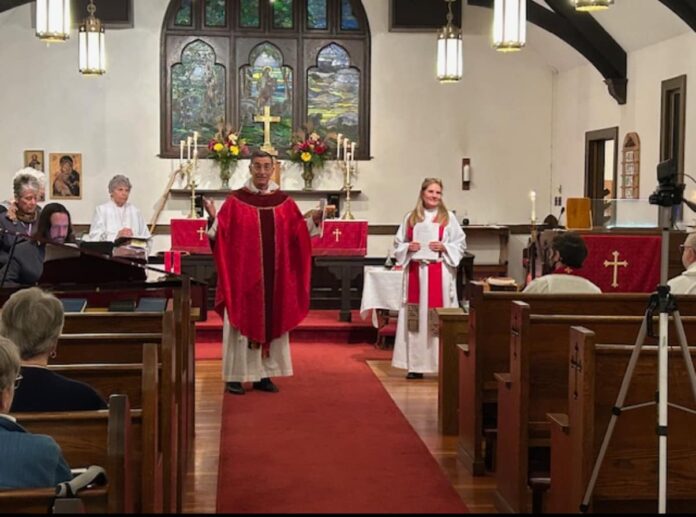
A New Hampshire Episcopal bishop is telling his clergy to get their affairs in order—including finalizing their wills—because they may be entering a “new era of martyrdom” under Trump’s immigration crackdown.
Bishop Rob Hirschfeld of the Episcopal Church of New Hampshire made the stark warning at a vigil honoring Renee Nicole Good, the Minneapolis woman fatally shot by an ICE officer on January 7.
And no, he wasn’t being dramatic for effect. He was dead serious.
WHAT’S GOING ON: Hirschfeld explicitly invoked the history of clergy dying to protect others, including Jonathan Daniels—a New Hampshire seminary student shot and killed by a sheriff’s deputy in Alabama while shielding a young Black civil rights activist in 1965.
“I have told the clergy of the Episcopal diocese of New Hampshire that we may be entering into that same witness,” Hirschfeld said. “And I’ve asked them to get their affairs in order, to make sure they have their wills written, because it may be that now is no longer the time for statements, but for us with our bodies, to stand between the powers of this world and the most vulnerable.”
THE DETAILS: Hirschfeld didn’t call for violence. Instead, he argued Christians should refuse to fear death itself if they want to truly protect vulnerable people. “If we truly want to live without fear, we cannot fear even death itself, my friends,” he said.
He’s not alone. Most Rev. Sean W. Rowe, the presiding bishop of the entire Episcopal Church, has called for Christians to shelter immigrants and refugees. “Without them, we cannot fully be the church,” Rowe said this week.
In Minnesota, Rt. Rev. Craig Loya urged people not to meet “hatred with hatred” but instead “mobilize for love” and “disrupt with Jesus’ hope.”
WHY IT MATTERS: When bishops start telling priests to write their wills, something has fundamentally shifted. The Trump administration insists the ICE officer who killed Good acted in self-defense.
Minneapolis Mayor Jacob Frey, Governor Tim Walz, and videos of the confrontation tell a very different story. The religious community is watching—and increasingly, they’re positioning themselves directly in the path of federal enforcement.