
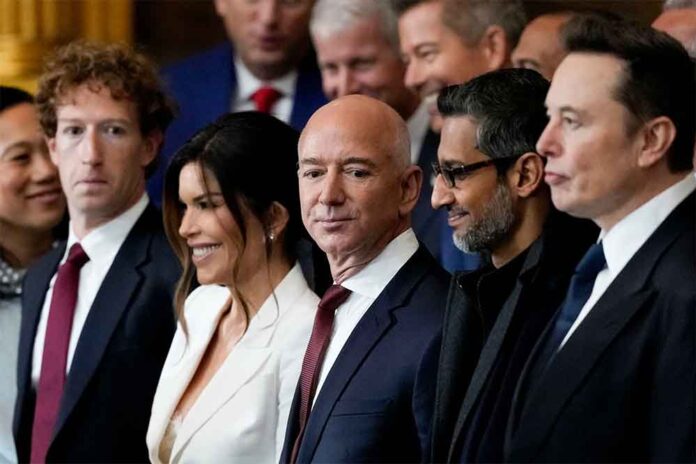
The world’s 12 richest billionaires now have more wealth than the poorest half of humanity—that’s more than four billion people. And according to a damning new report from Oxfam International, they’re using that obscene fortune to systematically dismantle democracy worldwide.
The report, titled “Resisting the Rule of the Rich,” lays out in brutal detail how extreme wealth concentration isn’t just an economic problem—it’s an authoritarian one.
The most unequal countries are up to seven times more likely to experience democratic erosion than more equal ones. And billionaires? They’re over 4,000 times more likely to hold political office than ordinary people.
We’re not talking about theoretical dangers here. We’re watching it happen in real time.
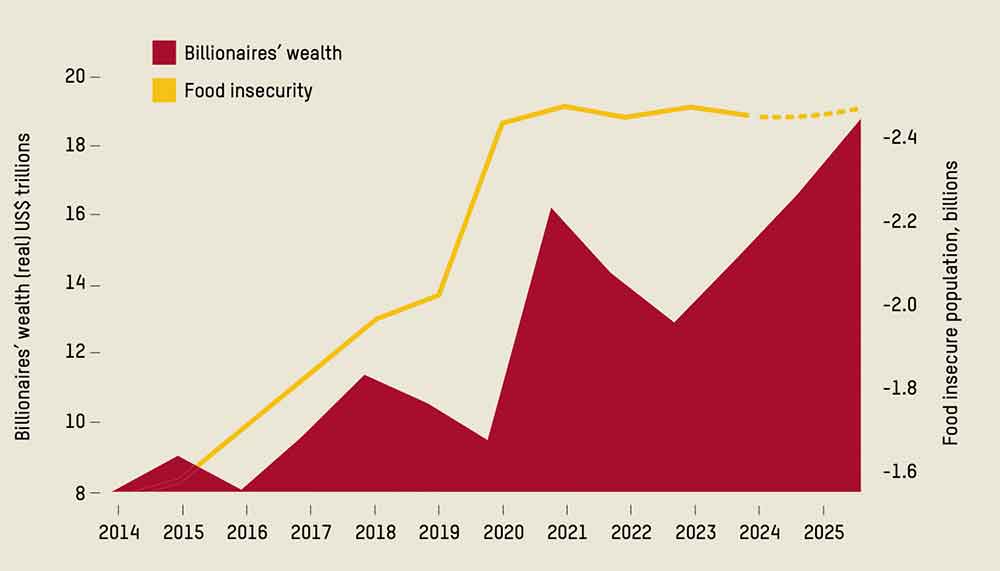
THE DETAILS: In 2025, billionaire wealth increased three times faster than the average annual rate over the previous five years. The number of billionaires has surpassed 3,000 for the first time. Elon Musk became the first person to amass wealth exceeding half a trillion dollars. Meanwhile, one in four people globally face hunger.
The report documents three main ways the super-rich have built their political power: buying politicians, dominating media and AI, and directly accessing government institutions.
In 2024, one in every six dollars spent by all US candidates, parties and committees came from donations from just 100 billionaire families. Nearly half of all people surveyed in the World Values Survey perceived that the rich often buy elections in their country. Over 11% of the world’s billionaires have held or sought political office.
The media landscape is equally captured. Over half of the world’s largest media companies have billionaire owners. Nine of the top 10 social media companies are run by just six billionaires. Eight of the top 10 AI companies are billionaire-run, with three commanding nearly 90% of the generative AI chatbot market.
OF COURSE: Elon Musk’s purchase of Twitter—now X—for $44 billion is a case study in how this works. Under the guise of “free speech,” he scaled back guardrails on hate speech. The result? A 500% increase in the use of racial slurs and spikes in misogynistic and transphobic content.
But it gets darker. Kenyan law enforcement has used X and other digital platforms to track and abduct protesters. In December 2024, demonstrators were kidnapped from the streets and tortured for posting anti-government images on the platform. In June 2025, protests erupted over the death of a man who’d criticized police on X.
In France, fossil-fuel billionaire Vincent Bolloré bought CNews and transformed it into the French equivalent of Fox News—then sued journalists who criticized him.
BUT BUT BUT: Defenders of the status quo used to point to poverty reduction as proof the system was working. That argument is dead. The reduction in global poverty has largely ground to a halt, with poverty actually rising again in Africa. In 2022, nearly half the world’s population—3.83 billion people—lived in poverty. Food insecurity increased by 42.6% between 2015 and 2024.
While billionaire fortunes skyrocketed, 92 million people face food insecurity in Europe and North America—some of the richest regions on Earth.
WHY IT MATTERS: When ordinary people protest these conditions, governments choose repression over redistribution. In Kenya, 39 people were killed during protests against tax hikes and inequality. Sixty cases of extrajudicial killings are being investigated, along with 71 cases of abductions. Victims were found tortured and mutilated.
In Argentina, billionaire-backed President Javier Milei issued decrees restricting the right to protest. Police responded to union demonstrations with mass arrests and rubber bullets to protesters’ heads and faces.
And instead of addressing the actual causes of hardship, governments scapegoat migrants. In the UK, the public conversation focuses on small migrant boats crossing the English Channel rather than the super yachts of the ultra-wealthy.
BOTTOM LINE: Even the rich see the problem. A 2024 survey of over 2,300 millionaires from G20 countries found that more than half believe extreme wealth is “a threat to democracy.” Polling across 36 countries found 86% of respondents agreed the top cause of economic inequality is that “rich people have too much political influence.”
A century ago, Supreme Court Justice Louis Brandeis said it plainly: “We may have either democracy or wealth extreme in the hands of the few. We cannot have both.”
We’re making that choice right now. And so far, democracy is losing.